
Introduction to Chakras
Chakras are rotating wheels of subtle energy that flow through our bodies, influencing physical health, mental and emotional balance, and spiritual perspective. In this guide we’ll explore what chakras are, describe the function of each of the seven main centers, and explain why a safe, gradual approach to balancing chakras is essential for reaping their benefits.
Definition of a Chakra
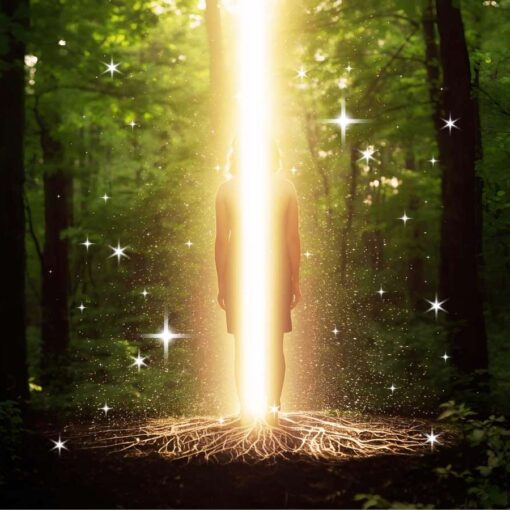
Chakras are spinning wheels of bio‑electromagnetic energy that flow through our bodies. They influence our physical health, emotional state, and spiritual perspective. Each chakra has a vortex serves as a vortex that receives, transforms, and distributes life force energy (prana, chi, or ki) across the physical, emotional, and mental aspects of a person or animal.
The 7 Main Chakras and Their Functions
Each of the seven main chakras is located along the spine, vibrates at a specific frequency, and is linked to a particular color. When a chakra is healthy, its energy moves freely, you feel comfortable in that area, and the related emotional quality is stable. A blocked chakra indicates stagnation e.g. tightness, numbness, or emotional resistance. An over-charged chakra feels overly active, leading to anxiety, irritability, or physical over-stimulation.
Root (Muladhara)
- Colour:Red
- Location: Base of spine, pelvic floor, legs, feet
- Gland & Organs: Adrenal glands, spine, legs, feet, colon
- Frequency range: about 7 – 10 Hz
- Main function: Safety, grounding, survival, physical stability
- Signs of imbalance: Fear, anxiety, insecurity, financial stress, fatigue, lower‑back pain, feeling ungrounded
- Balance: When the root chakra is balanced, the chakras collectively ground you to the Earth.
Sacral (Svadhisthana)
- Colour:Orange
- Location: Lower abdomen, below navel, hips
- Gland & Organs: Reproductive organs, kidneys, bladder
- Frequency range: about 10 – 14 Hz
- Main function: Emotions, creativity, pleasure, sexuality, flow
- Signs of imbalance: Emotional numbness, guilt, low libido, creative blocks, dependency, hip or pelvic issues
- Balance: A healthy sacral chakra supports creative flow, keeping the surrounding chakras energized.
Solar Plexus (Manipura)
- Colour:Yellow
- Location: Upper abdomen, stomach area
- Gland & Organs: Pancreas, digestive system, liver
- Frequency range: about 14 – 20 Hz
- Main function: Personal power, confidence, will, self‑esteem
- Signs of imbalance: Low confidence, control issues, anger, digestive problems, procrastination
- Balance: Strengthening the solar plexus chakra helps the chakras radiate personal power.
Heart (Anahata)
- Colour: Green (sometimes pink)
- Location: Center of chest
- Gland & Organs: Thymus, heart, lungs, immune system
- Frequency range: about 20 – 30 Hz
- Main function: Love, compassion, connection, forgiveness
- Signs of imbalance: Grief, jealousy, resentment, loneliness, heart or lung issues, difficulty trusting
- Balance: Open heart chakras allow love to circulate through all chakras.
Throat (Vishuddha)
- Colour: Light Blue
- Location: Throat, neck, jaw
- Gland & Organs: Thyroid, vocal cords, mouth, ears
- Frequency range: about 30 – 40 Hz
- Main function: Communication, truth, self‑expression
- Signs of imbalance: Fear of speaking, people‑pleasing, dishonesty, throat issues, tight jaw or neck
- Balance: Clear throat chakras ensure honest communication among the chakras.
Third Eye (Ajna)
- Colour: Indigo
- Location: Center of forehead, between eyebrows
- Gland & Organs: Pituitary gland, eyes, brain
- Frequency range: about 40 – 60 Hz
- Main function: Intuition, insight, perception, clarity
- Signs of imbalance: Confusion, lack of direction, overthinking, headaches, poor intuition
- Balance: Sharp third‑eye chakras sharpen intuition, aligning the upper chakras
Crown (Sahasrara)
- Colour: Violet or White
- Location: Top of head
- Gland & organs: Pineal gland, nervous system
- Frequency range: about 60 – 100 Hz
- Main function: Spiritual connection, awareness, unity
- Signs of imbalance: Disconnection, apathy, depression, rigid beliefs, feeling lost or isolated
- Balance: A luminous crown chakra connects the entire chakra system to higher consciousness.
Chakra Vortexes
Chakras are not just flat discs. Instead, they are three-dimensional vortexes that rotate around a central point. Picture a small tornado fixed in your body; its spinning creates two opposite faces. The two vortexes work together. The front-side draws in energy, while the back-side pushes it out. When they rotate at their natural frequency, the energy flow is smooth, and the chakra feels open.
Front-side vortex
This side looks outward toward the world.
- Function: it attracts external energy (like light, sound, and electromagnetic fields) and transforms it into the chakra’s subtle energy language.
- Typical sensation: a soft pull, tingling, or warmth on the skin (for instance, a glow in the throat when you speak).
Back-side vortex
This side faces inward toward your internal organs and spine.
- Function: it releases the processed energy into the body’s internal systems, nourishing the related glands, organs, and nerve pathways.
- Typical sensation: a grounding pressure, a feeling of anchoring in the muscles or bones behind the chakra (like a solid sensation in the lower back when the root chakra is balanced).
Chakra Imbalances
- If under-charged: The vortex is spinning too slowly and is below its natural frequency. It can’t draw enough external energy, so the center holds a low amount of charge.
- If over-changed: The vortex is spinning too quickly and is above its natural frequency. Consequently, the chakra pulls too much from the external environment. You may feel surface tingling, heat, heightened external awareness, restlessness, irritability, or sensory overload.
- If blocked: The chakra struggles to attract new energy. You might feel stuck, tired, or notice a dull sensation on the surface. The vortex’s flow is disrupted or halted by physical tension, emotional resistance, or habitual thought patterns. Energy may still be trying to move, but it encounters a barrier.
How to Heal Chakra Imbalances
Daily breathwork, mindful movement, and balanced nutrition keep your chakras in sync.Balancing techniques like breathwork, visualization, and movement typically address both sides. You visualize energy coming in through the front side and flowing out through the back side, restoring the balanced vortex that keeps the chakra working well.
- Grounding (Root): Walking barefoot, consuming red foods, practicing breathing exercises
- Creative movement (Sacral): Dancing, eating orange foods, doing hip-opening yoga poses
- Core strengthening (Solar Plexus): Performing planks, eating yellow foods, practicing breath-of-fire pranayama
- Heart-opening (Heart): Keeping a gratitude journal, eating green foods, doing chest-expanding stretches
- Vocal expression (Throat): Engaging in chanting, consuming blue foods, doing neck rolls.
- Visualization (Third-Eye): Practicing indigo meditation, eating dark-blue foods, using eye-relaxation techniques
- Silent contemplation (Crown): Eating white or violet foods, meditating, and getting exposure to natural light
The Evolution of Chakras
As we travel upwards our chakras, as we understand them, morph into energetic bands that contain and define our individual energy signature. These higher dimensional energetic bands are split into the third dimensional aura and chakra systems thus allowing us to experience a new way of being; a way of being that is both positive and negative. Yes, this can be very hard on us as we try to acclimate to this new way of being, but it is part of the contrast we are here to experience.The third dimension is the only place in creation where our energies are vulnerable. It is part of the polarity experiment.
Frequently Asked Questions (FAQ)
Why do some people think chakras are harmful?
Chakras, it is argued, can be used against us in various ways such as to drain our energies, to make us susceptible to negative energies, and to control us on an energetic level.
You can read online about individuals who have rid themselves of their chakras. They say they have never felt better. They feel free, happy and joyful. If you are empathic, they recommended you divest yourself of your chakras immediately so as to be free of other people’s angst. (An appealing thought, I readily admit). All you have to do is ask your higher self to send energy down here to your third dimensional self.
Is it advisable to remove, or rid oneself of, chakras?
In my experience, no.
Trying to eliminate chakras is seen as a quick fix that carries serious risks:
- Energy overload: Bringing in higher vibrational energy is achievable, but takes practice. Bring in too much and you can short-circuit your human body. There are those who claim this can also lead to spontaneous combustion.
- Physical harm: Bring in too little or inconsistent amounts and you will ‘starve’ or otherwise damage your physical body.
- Lack of evidence: To my knowledge, there is no proof demonstrating that chakra removal is advisable.
There is absolutely no shame in not liking life within the chakra system of the third dimensional matrix. Life here is contrary to who we really are; however, if you feel that ridding yourself of your chakras is your only option to remain here, then please exercise extreme caution. Research your options and do this properly. This process does not sit well with me, and I’m not advocating this path, but if you do choose to follow it, be safe, be careful, and be well-informed first.
By learning about chakras and their functions, you can engage with them purposefully instead of trying to remove them. The subtle energy system is an integrated whole; caring for each center enhances overall well-being.
How does the concept of breatharians relate to chakra work?
Breatharians are people who say they can live only on prana, meaning the body can operate without food. We know intrinsically we can survive on prana rather than eating food. Breatharians have proved this. But, that does not mean you should stop eating food tonight for good. You have to ease your way into this.
In Conclusion
Balancing the seven chakras is a gentle, ongoing practice that nurtures both physical vitality and inner peace. By incorporating simple breathwork, mindful movement, and supportive nutrition into your daily routine, you can keep the energy vortexes turning smoothly and experience greater harmony across body, mind, and spirit. Start with one chakra today, observe the shift, and let the ripple effect guide you toward a more balanced, vibrant life. If you found this guide helpful, feel free to share it and explore our other articles on holistic well‑being.
If your chakras are in need of balancing, we offer distance energy healing and we’d be happy to help!